On October 1, 2025, I bought a 1-acre building site on the hill above town with the intent to reclaim the property and turn it into a community park.
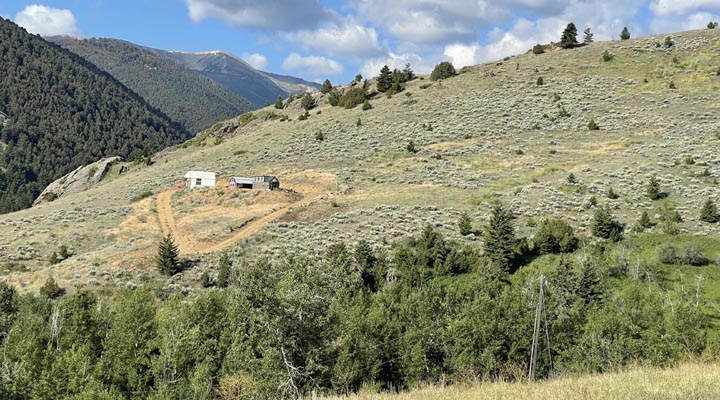
The former owner was well-intended, but bought a lot that was too steep to reasonably develop. The road scar and buildings on the hillside have been an eyesore that dominated the view within town.
There is power to the site, and a permit for a septic system, but no well, and apparently well drillers were unwilling to attempt the driveway. Instead, the owner installed a cistern with a pump and spigots, but was dependent on neighbors to supply water he could truck up the hill to refill the tank.
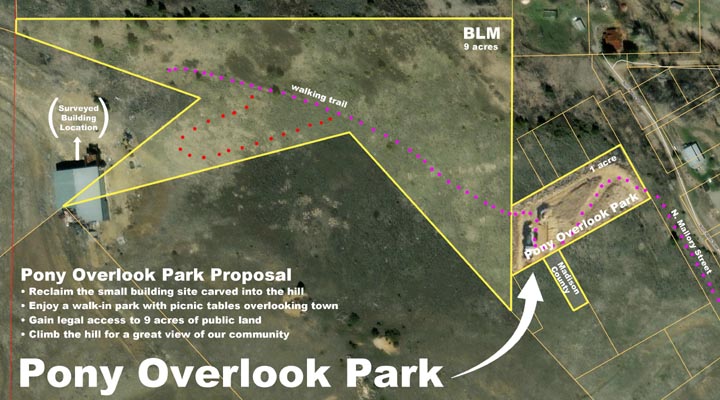
My vision is to partially restore the hillside, plant some drought-tolerant junipers and Douglas fir trees, allow walk-in access only, and put a couple picnic tables there for visitors to enjoy lunch with a grand vista.
The property will provide the only legal access to 9 acres of adjacent BLM public lands, making a 10-acre park for the cost of 1-acre. Traces of an old road will serve as an existing trail for anyone who wants to hike up the hill for an epic view over the valley, with the potential to add other trail loops.
I used a line of credit against my house for the land purchase with the hope that we can do a fundraiser through a local nonprofit to buy me out of it. I am still researching nonprofit options for collaboration, I will be responsible for leading the actual fundraising and reclamation effort.
I basically bought a hole carved in the side of the hill, and now I need to dig my way out of debt!
The seller removed the tiny home that was on the property. I later sold the red shed, and that has also been removed. The 14' x 20' glamping tent remains up for sale.
I hope to get started with the first stage of clean-up in the spring of 2026, especially reclaiming the near vertical north driveway (right driveway in the photo). This will require considerable earth-moving, plus the addition of organic matter to help hold the soil in place and enrich it over time.
Neighbors have begun delivering brush and logs that can be utilized to help stabilize the reclamation work. A tree-trimming service for the power company delivered a couple truckloads of wood chips, which will also be used as a soil amendment and mulch to better hold water and re-establish life on the site.
In my other nonprofit work, I led the successful effort to purchase three different riverfront parcels along the Jefferson River, which are now public campsites for paddlers along the Jefferson River Canoe Trail. We are seeking additional properties to fill in the longer gaps along the river.
This new park project in my community adds whole new commitments of time and energy, so it may not happen quickly, but I am confident that it will all work itself out for the best over time!
Conservation Trade-up Challenge Trading a book for a campsite on the Jefferson River Canoe Trail
You may have heard of the man who traded a red paperclip for a house or the woman who traded a bobby pin for a house...
These projects inspired Jefferson River Chapter LCTA president Thomas J. Elpel to initiate a "conservation trade-up challenge" with the goal of trading a book for land for a campsite for the public along the Jefferson River Canoe Trail.
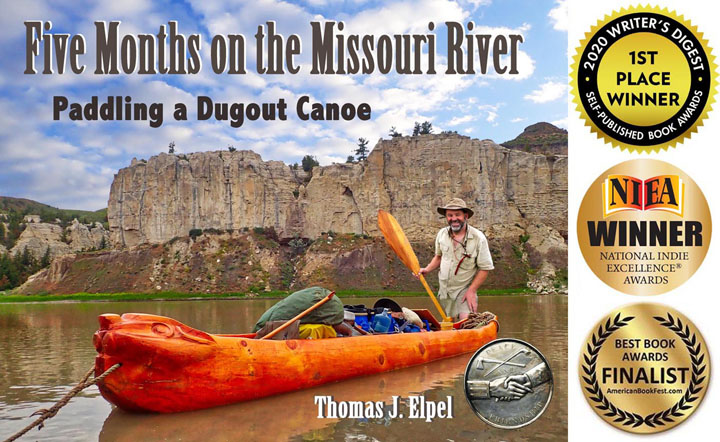
As an author, Elpel thought it seemed logical to initiate the trade-up challenge with a book, offering Five Months on the Missouri River, his Lewis and Clark-themed travelogue about paddling a dugout canoe from Montana to St. Louis with five men and a dog. Elpel won the Writer's Digest 2020 First Place Award for Nonfiction for the book.
Elpel launched the trade-up challenge in 2022, trading the $36 book for a $460 Women Rising Wild retreat with wolves in Colorado. He then traded that retreat for a $1,150 Coming Home retreat in Oregon and later traded that retreat for a $1,750 five-night AirBnB stay at Sage Mountain Center near Whitehall, Montana. The AirBnB stay was traded for a handcrafted cedar strip canoe valued at $2,500, which was traded for a whole processed Angus beef valued at $4,000. Elpel later swapped the whole beef for a wilderness pack trip with Ralph Johnson of Specimen Creek Outfitters in Jardine, Montana, valued at $5,000. Elpel ultimately accepted a cash offer for the wilderness pack trip, officially bringing the Conservation Trade-Up Challenge to a close. The funds will help the Jefferson River Chapter build a nest egg towards the next campsite acquisition. Watch the full Trade-Up Challenge series above.
Missouri River Corps of Rediscovery
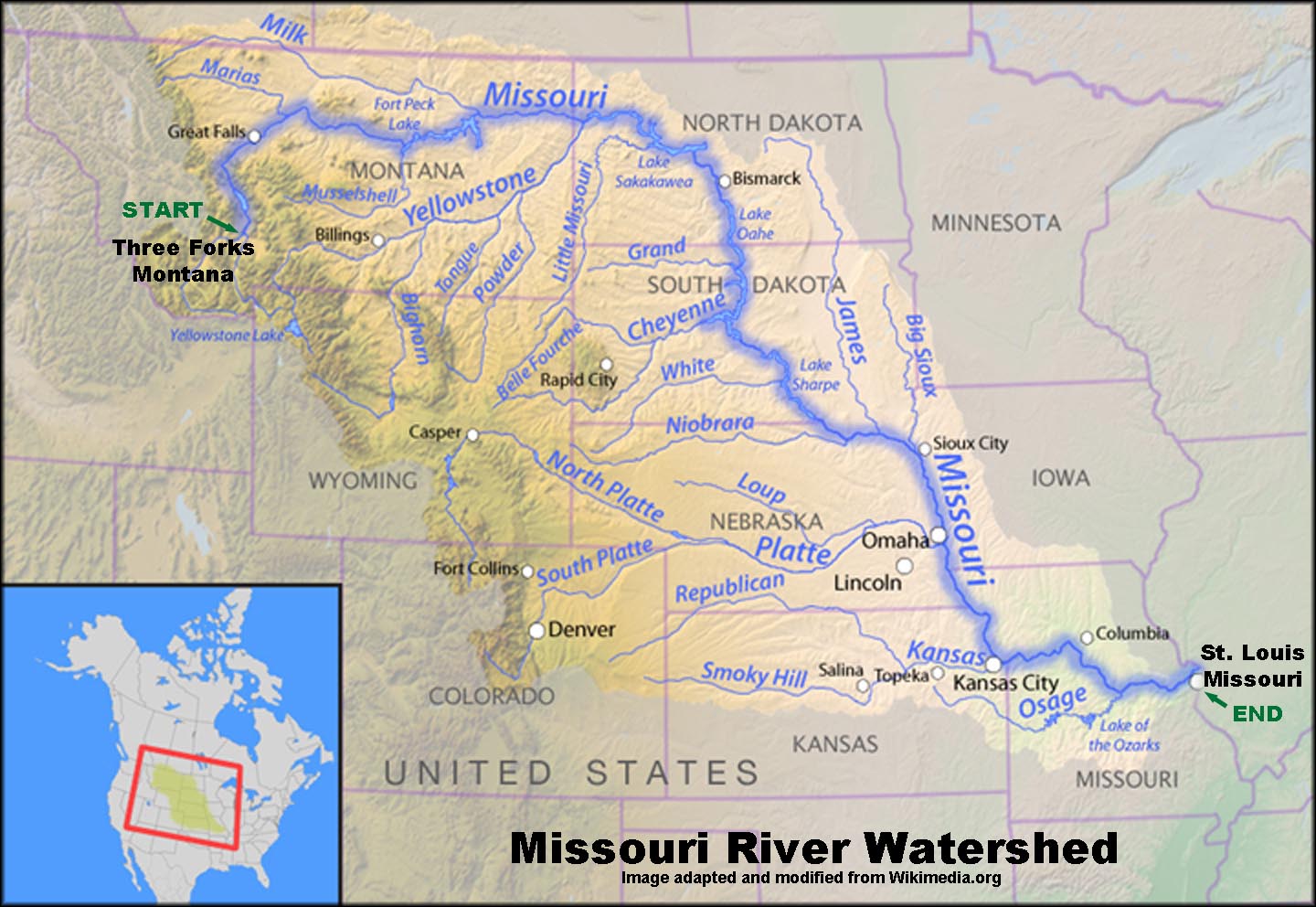
From Three Forks, Montana to St. Louis, Missouri: Five months / 2,341 miles
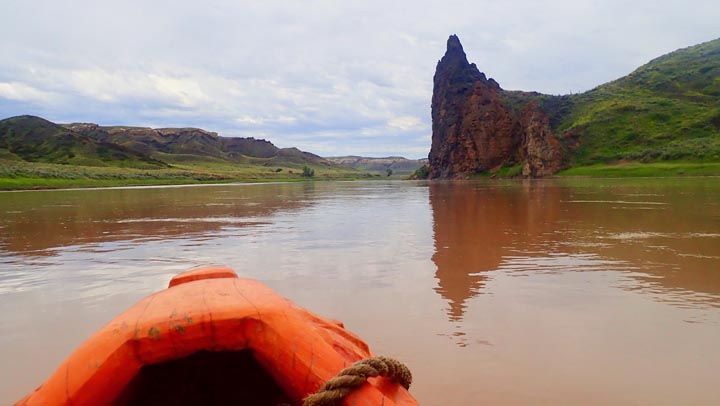
A journey of two thousand miles began with a great big log. Ours was a 10,000-lb. Douglas fir log hauled to camp from a local sawmill. The wood was hard, brittle, and full of knots. It took us three months to whittle the log down to a 500+ lb. canoe. Enlisting four friends and former students from my wilderness survival programs, I then led a five-month "Missouri River Corps of Rediscovery" expedition to paddle the 2,341-mile river from Three Forks, Montana to St. Louis, Missouri.
I was privileged to craft the canoe with Churchill Clark, the great-great-great-great grandson of Captain William Clark of the Lewis and Clark Expedition. Following in William's footsteps, Churchill travels America "carving canoes and paddling trees." He oversaw work on the dugout canoe to design a boat that was both artistic and functional. Seeing the image of a beaver face in the bow, he sculpted it into the design, carving a corresponding tail in the stern. The resulting twenty-foot canoe was both a beauty and a beast, which I named Belladonna Beaver. We tested the canoe on a weeklong journey down the Marias River, then began preparations for the great Missouri expedition.
President Thomas Jefferson tasked Meriwether Lewis with more than following the Missouri River to its source in search of a potential water route to the Pacific. Jefferson commanded Lewis to study the geography and geology of the route, to note any useful resources, and to document the plants, animals, and fossils encountered along the way.
Herein is the enduring appeal of the Corps of Discovery. Rather than blindly race to the end, they engaged in a scientific journey of discovery, collecting samples and journaling about their observations.
In a similar vein as Lewis and Clark, our "rediscovery" of the Missouri River was more about exploring the river than merely paddling to the end. The water served as a highway to access an undiscovered country. Every campsite offered a new opportunity to hike and explore, identify new plants, forage for wild foods, hunt carp with bows and arrows, learn new birds, and seek to better understand bird language. The end goal of paddling to St. Louis provided a convenient excuse to spend five months camping, hiking, and exploring, slowly changing scenery as we migrated downstream.
I hope you're doing well. Just wanted to give you a huge kudos on your book, Five Months on the Missouri River. I hadn't got around to reading it until now, but just finished it last night. Amazing pictures and stories. Brought back so many memories from my trip. I think we stayed in a lot of the same spots for camping. Great work, hope to see you on the river!




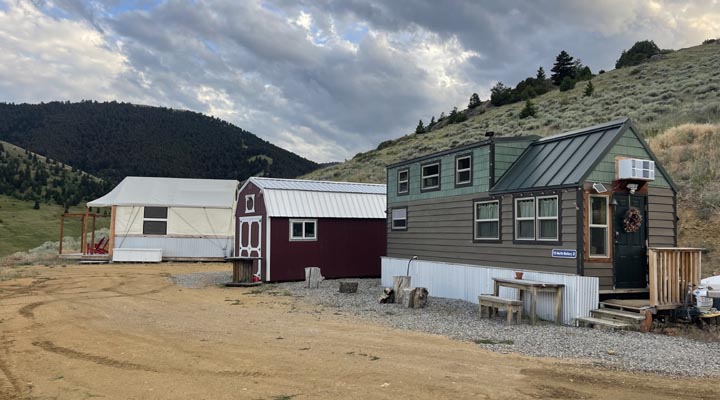 The seller removed the tiny home that was on the property. I later sold the red shed, and that has also been removed. The 14' x 20' glamping tent remains up for sale.